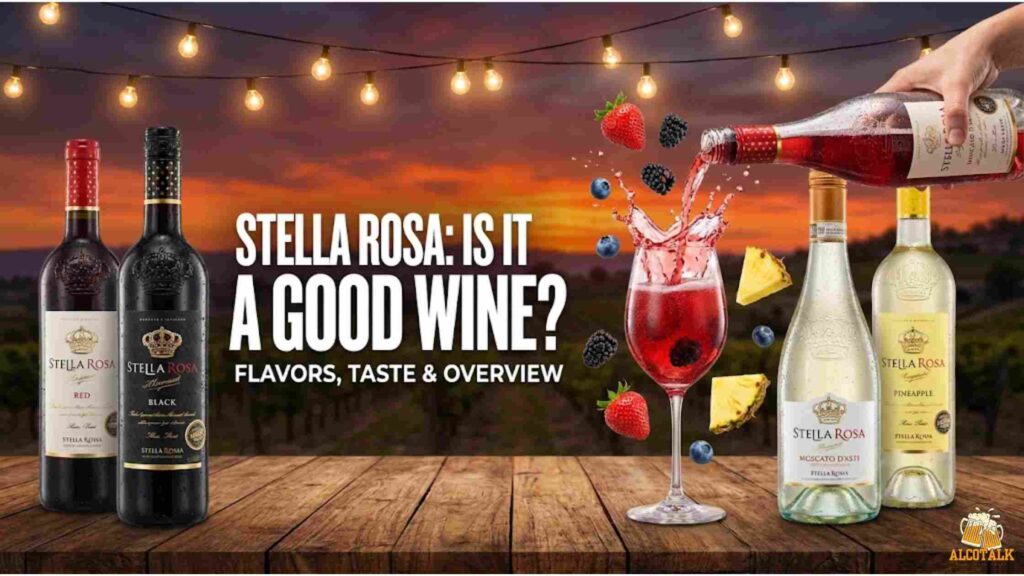
Assume that you’re enjoying a warm summer night in the hills of Piedmont. The air is thick with secrets, the vines almost humming if you listen hard enough. You pop open a bottle, expecting that usual slap of tannins, but nope—what you get is a rush of berries, fizzy and sweet, almost playful. That’s Stella Rosa.
The Riboli family rolled the dice on this one back in 2005, mixing Italian tradition with a wink. This isn’t your grandpa’s Barolo. Stella Rosa shows up in silk slippers—semi-sweet, semi-sparkling, a light 5-8% ABV.
It’s gluten-free, often vegan, and just 100 calories a glass, clearly eyeing the wellness crowd. But is it actually good? Depends who you ask. Purists roll their eyes and call it “baby wine” or worse—fruit punch in disguise. Fans hoard it like treasure.
So let’s pull back the curtain, taste what most people skip, and see if Stella Rosa deserves a spot in your stash.
Spoiler: You might just fall for it.
Unveiling the Seductive Spectrum of Stella Rosa
Stella Rosa isn’t just one wine. It’s a whole family—reds, blacks, rosés, and some wild fruit blends. Grown in Asti’s sunny orchards, with Brachetto and Moscato grapes, these bottles journey from Italy to the Riboli’s San Antonio Winery in LA.
What’s the secret? The grapes get pressed, spun, and then chilled down to a teeth-chattering 28°F as juice. They ferment it in bursts, trapping that lively fizz. Not many winemakers freeze time like this. The result? Bubbly without the hangover.
By 2026, critics call it California’s top-seller, outselling the “serious” wines and stinging the egos of wine snobs everywhere. Still, whispers linger: too sweet, too gimmicky, not cellar-worthy. Let’s dig in.
1. Is Stella Rosa a Good Wine?
So, is Stella Rosa actually good? Depends what you mean. If you want complexity that demands a thesis, look somewhere else—Stella isn’t brooding or intimidating. For pure fun? It nails it.
People in 2026, like the folks at Uncorked & Cultured, say it’s a win for newcomers, calling out how it makes wine less scary. One cool detail: its pH—usually around 3.5 to 4.0—keeps the sweetness from getting out of hand, which is rare for a budget wine.
Fans online rave about the Black version, calling it “bussin’ fruit wine that doesn’t taste like rotten grapes.” Downsides? It loses its fizz fast in the heat, so keep it icy cold or risk disappointment. Pair it with spicy Thai food, and suddenly it shines. Good? For most people, absolutely. Revolutionary? In its own quirky way, yeah.
2. Stella Rosa Black Wine
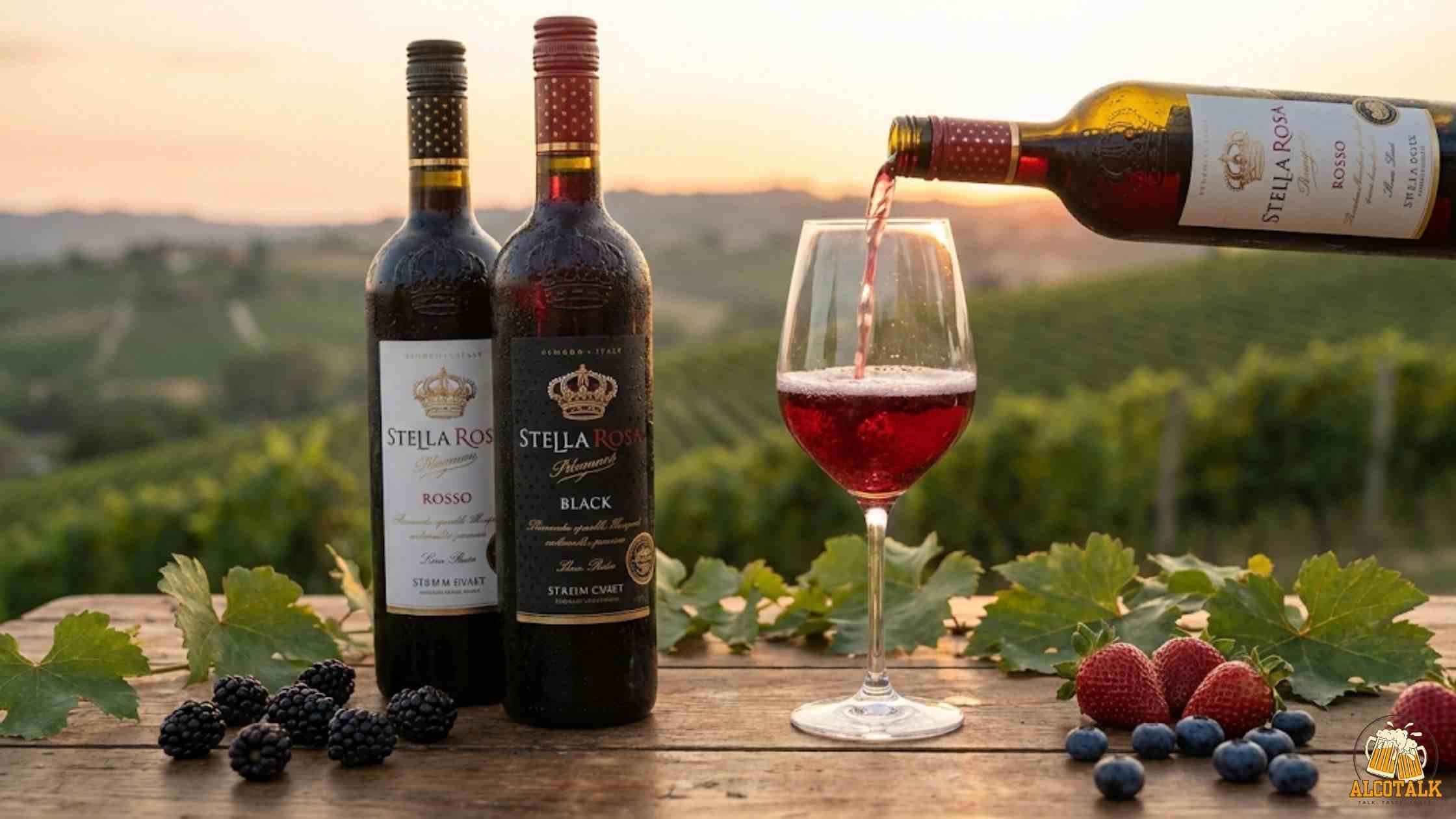
Stella Rosa Black—just saying it conjures up midnight orchards and velvet shadows. This semi-sweet red is the mysterious star of the lineup, built on Brachetto d’Acqui grapes. The Ribolis keep their grape sources close to the chest, but rumor has it they come from Piedmont slopes where volcanic soil adds a bit of earthiness.
Unlike ports, it’s not fortified. That cold-juice trick keeps things lush—think blackberry, blueberry, a hint of licorice, and even white tea and citrus if you let it breathe for ten minutes (hardly anyone mentions that).
At just 5% ABV, it sneaks up on you, perfect for brunch or late-night talks. People online in 2025 call it “seductive, rich, velvet on the palate,” a dream for anyone wanting flavor without heaviness.
Secret tip: pair it with smoked salmon canapés—the salt cuts right through the plush fruit. Flaw? It disappears fast, gone before you know it. But man, what a ride.
3. Stella Rosa Red Wine
Now for Stella Rosa Red, the original spark that started it all. They call it Rosso—deep garnet, made from a secret blend of Piedmont grapes, just shy of dry so you get wild strawberries and plums wrapped in bubbles.
There’s a twist: hints of clove and damp forest, a nod to Piedmont’s autumn air, but you’ve got to pay attention to catch it. This is the wine that converted skeptics, with reviewers in 2025 noting a “mild spice on the nose, effervescent but not too much.”
Low in calories, low in booze, it’s perfect over ice at a barbecue—it even brings out the best in ribs. Critics complain the sweetness can stick around a bit too long if you’re sipping it solo. But put it in a blind taste test with Lambrusco, and it holds its own, surprising even the experts.
Online, people say, “Only red I like—no more nasty rotten fruit.” It doesn’t pretend to be fancy. It’s bold, genuine, and, honestly, kind of essential.
4. Stella Rosa Wine Flavors
Stella Rosa doesn’t just dabble in flavors—it throws open the whole paintbox. Take the Pineapple: sure, it’s tropical, but there’s this sneaky hint of guava thanks to oddball Asti vines and their microclimate quirks.
The Ruby Grapefruit? It’s not just citrus. You’ll catch blood orange and sage—stuff you’d expect in old herb gardens, not a bottle. And no, these aren’t flavor drops from a lab.
They’re the wild results of carefully staggered fermentations. Riboli’s custom yeast strains dig deep, pulling out compounds like furaneol, which tricks you into tasting strawberries. In 2025, Paste Magazine called one variety “mango juice with a wink”—perfect if you’re spice-shy but still curious about their Chili Mango bottle.
Want to push it? Drop some into sangria with muddled habanero. That’s Stella Rosa: flavors that don’t just show up, they steal the scene.
Decoding the Craft: From Vine to Verdict
This isn’t just clever branding—there’s real intention here. The Riboli family, Italian immigrants, didn’t just luck into their winemaking empire; they built it from the ground up after Prohibition.
They brought in Asti grapes, fine-tuned their fermentations to keep the alcohol low and the aromas high, and even spun the juice in these proprietary centrifuges that separate out solids without beating up the flavor.
Most bottles are vegan—no animal-based agents, which almost nobody talks about. Innovation and tradition go hand in hand: some nights you pair it with cioppino, other times you get wild and drizzle it over gelato for a boozy dessert. But does all this craft make it good? Let’s dig in.
5. Is Stella Rosa a Good Wine?
So, is Stella Rosa actually good? Based on 2026 numbers, it’s a solid yes. It’s popular for a reason: people love the fruitiness, even if critics say it lacks “seriousness.” Sales keep climbing, blowing past other imports.
Its big trick? The fizz isn’t just pumped in; it comes from natural refermentation, which gives it a softer, lingering sparkle. Sommeliers-in-training recommend it for beginners: sweet, gentle, no harsh alcohol burn.
Sure, some folks on Reddit complain that the hate is just wine snobbery and say your taste changes over time. Good wine grows with you, and Stella Rosa does just that.
6. Stella Rosa Black Wine
Now let’s get into Stella Rosa Black. This one’s got a backbone of Brachetto—a grape that’s not just red, it’s deep, almost regal. Throw in some teinturier grapes, and you get that dark, inky look you don’t see in many reds.
You might catch a hint of violets, thanks to unique compounds from the local soil—stuff you’ll only find if you dig through winemaker notes. They even let some batches rest on the lees after chilling, adding a creamy, almost dessert-like texture that lifts it above your average mixer. Fans love it with chocolate-dipped strawberries; the tannins play nice, not bossy.
Watch out, though—it’s sensitive to light, so keep it in the dark, or you’ll lose that punch. Even blind-tested against Zinfandel, casual drinkers keep picking it. Mysterious and memorable.
7. Stella Rosa Red Wine
Stella Rosa’s red isn’t just a sugar rush. Sure, you get raspberry up front, but there’s more if you pay attention—damp earth, a little baking spice, all from skipping the barrels and keeping things fresh. Sometimes you’ll catch a flash of quince jam, especially in years with humid late harvests in Asti.
In 2026, people on X were raving: “Cheap, sweet, cold—it’s gone before you know it.” Try it with turkey sliders; the fruitiness cuts through the salt. The downside? It won’t hold its own for slow sipping, but as an entry point, it’s perfect.
8. Stella Rosa Wine Flavors
Here’s the real frontier. In 2026, their Imperiale Fior d’Arancio hit the shelves—think orange blossom honey and a bite of grapefruit, straight from Colli Euganei. It’s got a grip that slices through sweetness like morning sun.
The Peach flavor hides a whiff of hayloft, something only the sharp-nosed will spot. Online buzz? People call the Strawberry Rosé “romance in a glass”—delicate, pink, just right. Want to play? Muddle in some basil and see what happens. These flavors don’t just follow trends—they wander, forgive, surprise.
Conclusion
Stella Rosa isn’t for the wine snobs or anyone who wants to overthink their glass. In a world full of bottles that try too hard, this one is pure fun.
Pop the cork. Let it fizz. See what you think.
Similar Topic: XXL Wine Price Guide: Flavors, Sizes & Cost in 2026